
New to Your Home · Birds
Bird Cage Architecture
Safe Metals, Bar Spacing, and Flight Dimensions
The cage is the one thing your bird touches all day, so it had better be built right. 10 lessons on zinc and lead poisoning from cheap wire, stainless steel versus powder-coated wrought iron, bar spacing by species from finches to macaws, why rectangular cages beat round ones, perch variety and bumblefoot, which natural woods are safe and how to sanitize them, floor grates versus foraging trays, placing the sleep perch high and out of drafts, predator-proof outdoor aviary construction, and double-door vestibules that stop escapes.
About this course
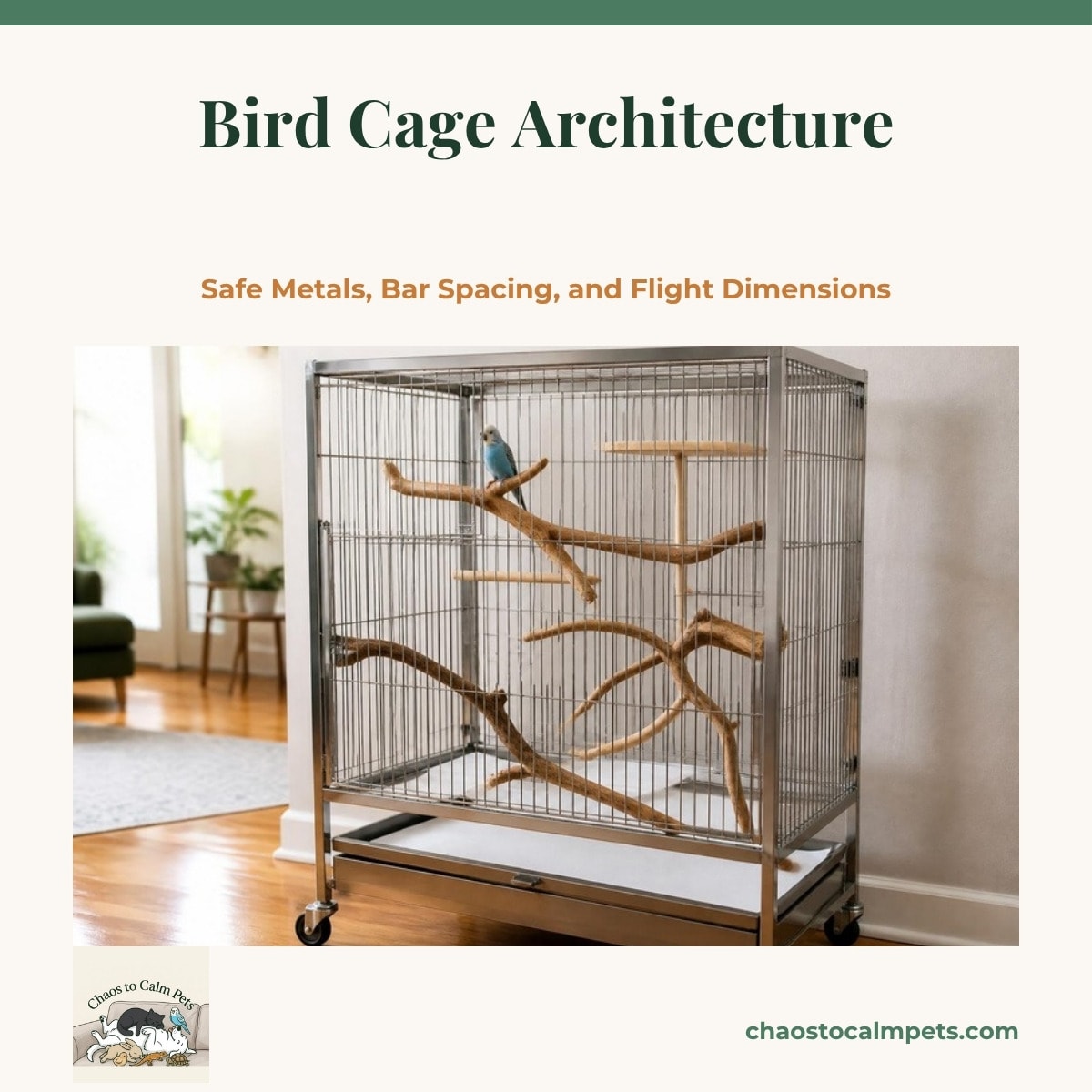
Most cage problems are built in before the bird ever moves in. This course walks you through the decisions in order. Lesson 1 is the one that scares people, and it should: a parrot chews its bars all day, and cheap galvanized or flaking metal sheds zinc and lead into its mouth, so you'll learn the signs of poisoning and how to inspect hardware. Lesson 2 compares surgical stainless steel with non-toxic powder-coated wrought iron and tells you when a chipped coating means the cage is done. Then you'll measure bar spacing for your species, from 3/8 inch for finches up to 1.5 inches for a macaw, and learn why a wide rectangle with corners beats a decorative round cage every time. The middle lessons cover feet and furniture: throwing out the uniform dowels that cause bumblefoot, choosing natural branches of different thicknesses, which woods are safe, and how to scrub and bake them. You'll sort out grates versus foraging trays, put the sleep perch in the upper third of the cage away from drafts and bowls, and, if you are building outdoors, use welded wire mesh, bury a dig barrier, and add a double-door vestibule so a startled bird cannot bolt into the sky.
What you'll learn
- Heavy metal poisoning from cheap cage wire: how it happens, the signs, and what to inspect
- Stainless steel versus powder-coated wrought iron, and when a chipped coating means replacement
- Bar spacing by species from finches to macaws, and why rectangles beat round cages
- Perch variety and natural branches to prevent bumblefoot, and which woods are safe to use
- Floor grates versus foraging trays, and placing the sleep perch high, dry and draft-free
- Outdoor aviary construction with welded wire, dig barriers and a double-door vestibule
Who this is for
First-time bird owners standing in a pet store aisle trying to pick a cage; keepers upgrading from a round starter cage to a proper flight; and anyone planning a backyard aviary who wants raccoons, rats and open doors handled before the birds move in.
Course outline (10 modules)
Quiz & Certificate
Knowledge quiz
After completing all lessons, take a short quiz to test your understanding.
Go to quiz →Completion certificate
Pass the quiz and earn a shareable certificate of completion.
View certificate →Frequently asked questions
Ready to get started?
$9.99 · Lifetime access · 10 lessons