
New to Your Home · Birds
Bird Brooder Flooring Guide
Preventing Splayed Legs and Toe Deformities
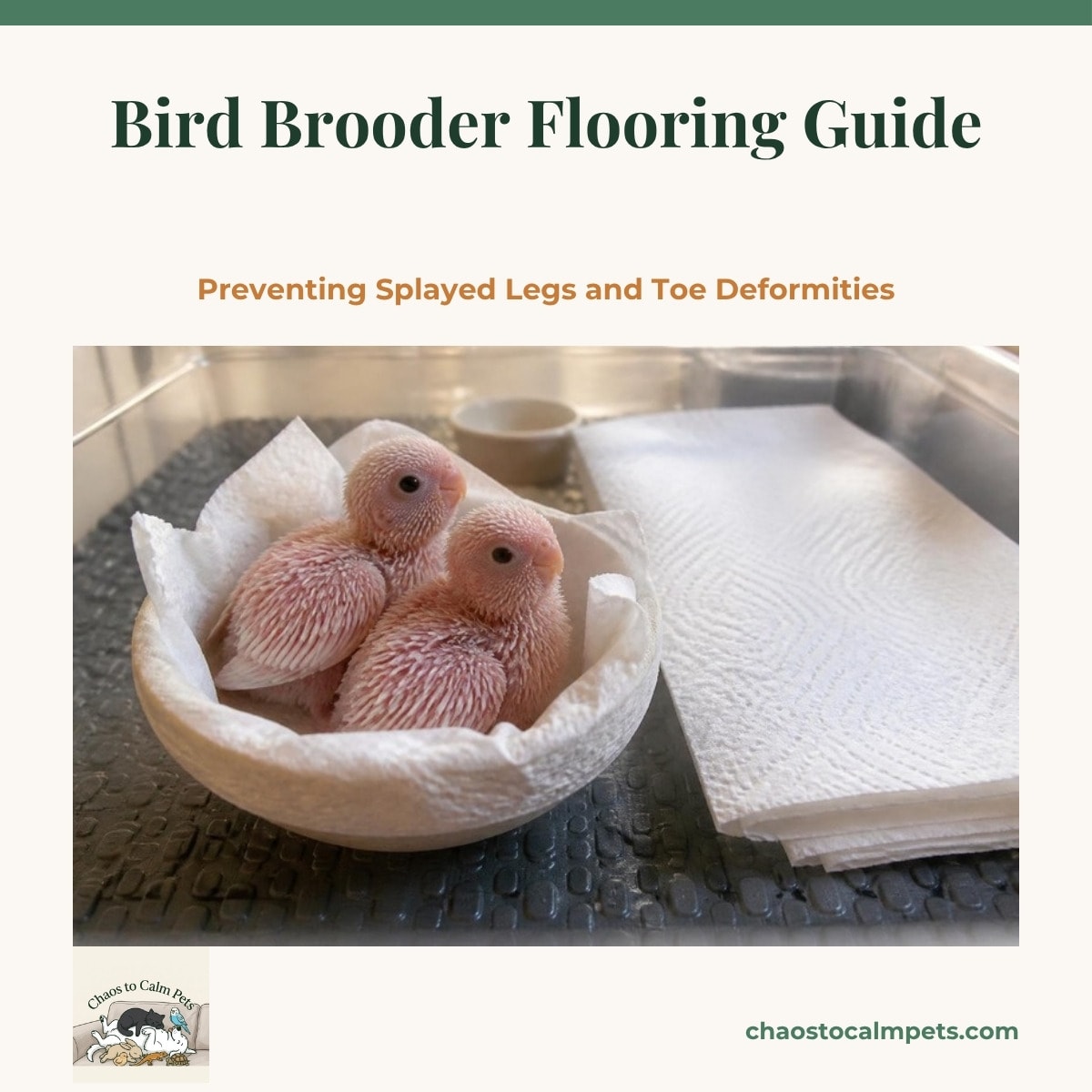
Splay leg is almost always a floor problem, and floors are easy to fix. 10 lessons on why a chick's soft cartilage hips slide apart on smooth plastic or paper, building a textured paper towel grid, moving up to rubber grip mats as chicks get heavier, why wood shavings are banned from a parrot brooder, shaping a nest cup that supports the keel, catching curled toes in the first week, spot cleaning at every feeding, dust-free bedding for fragile lungs, graduating chicks to the open floor, and easing weaning birds onto wire grates.
About this course
In their first two weeks, chicks have hips made of cartilage, and every time a leg slides out on a slick floor that hip can slip. This course is about the floor. You'll learn why splay leg happens and why it becomes permanent once the bone sets around day 10 to 14, then build a traction floor from unprinted paper towels folded and crumpled into a grid that also lets you read droppings at every feeding. As chicks get heavier and start shredding paper, you'll move them onto perforated rubber or silicone grip mats that get scrubbed daily. You'll hear the case against wood shavings in a parrot brooder: swallowed flakes impact the gut, splinters pierce the crop, and the wood carries mold spores. Then the nest cup, shaped so the keel and hips are cradled instead of flattened. You'll learn to spot a curling toe in the first week and fix it with a paper shoe or light tape while the cartilage is still soft. The last lessons cover spot cleaning at every feeding and a full daily reset under warmth, dust-free liners for lungs that can't handle particles, letting chicks graduate to the open floor at days 14 to 21, and covering half a wire grate so a weaning bird can choose its footing.
What you'll learn
- Why cartilage hips slip on smooth floors, and the window before splay leg becomes permanent
- Building a textured unprinted paper towel grid, and reading droppings on it at every feeding
- Upgrading to perforated rubber or silicone grip mats in weeks two and three, scrubbed daily
- Why wood shavings are banned from parrot brooders, and a nest cup that protects the keel
- Catching curled toes in the first week with textured liners and tape, and cleaning without chilling
- Dust-free liners for fragile lungs, graduating to the open floor, and easing onto wire grates
Who this is for
Hand-feeders who noticed a chick's legs sliding sideways and want to fix the floor before it becomes permanent, keepers switching from a poultry-style shavings setup to raising parrot chicks, and anyone whose vet has mentioned splay leg or curled toes and who wants to prevent the next case.
Course outline (10 modules)
Quiz & Certificate
Knowledge quiz
After completing all lessons, take a short quiz to test your understanding.
Go to quiz →Completion certificate
Pass the quiz and earn a shareable certificate of completion.
View certificate →Frequently asked questions
Ready to get started?
$9.99 · Lifetime access · 10 lessons