
Health & Care · Cold-Blooded Crew
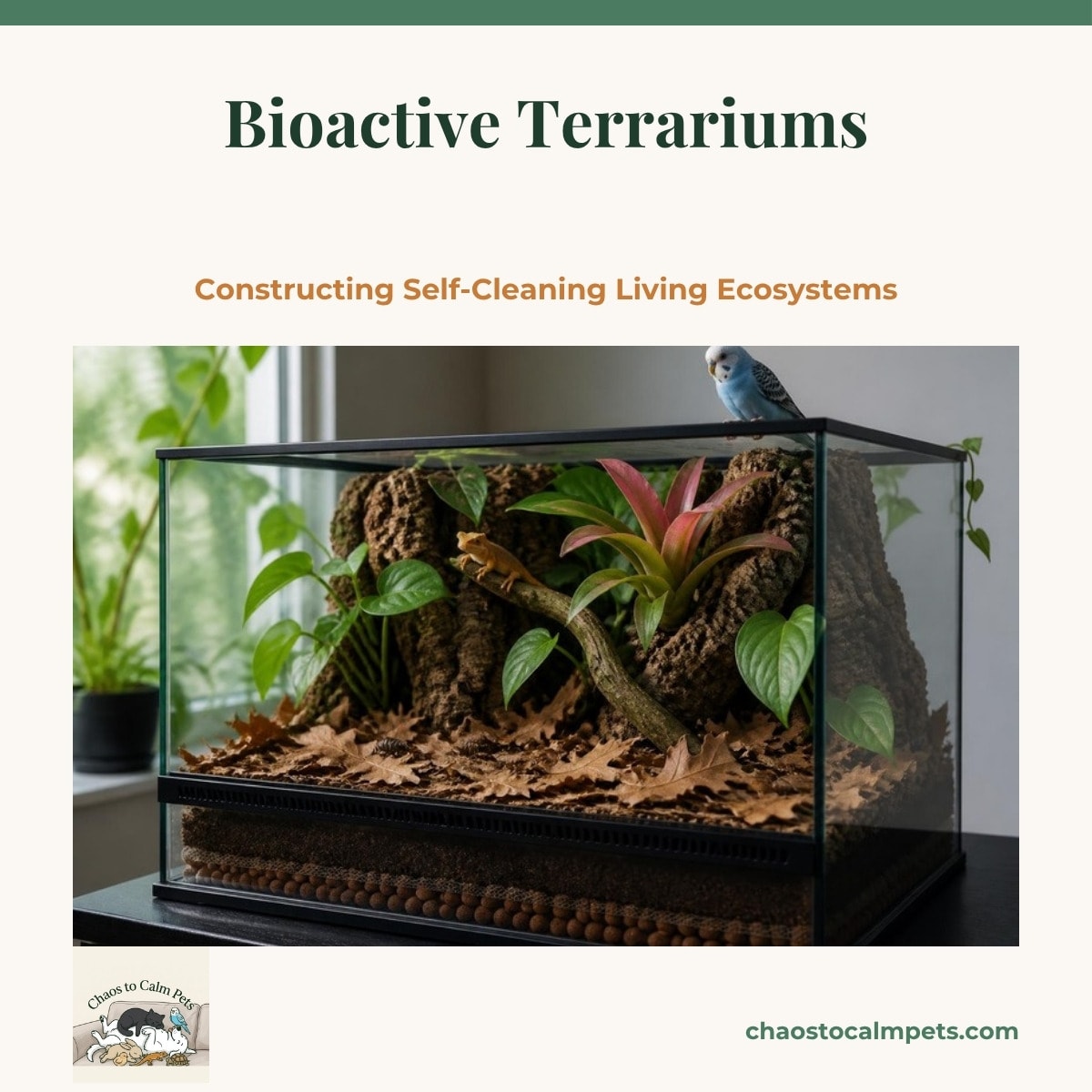
Bioactive Terrariums
Constructing Self-Cleaning Living Ecosystems
Stop scrubbing the tank; hire a soil. 20 modules on what bioactive actually means, front-opening glass and resealed seams, hydroball drainage aquifers with a corner siphon port, the geotextile barrier, the ABG tropical mix and arid topsoil-sand-clay floors, springtails and isopods and feeding them before the pet arrives, the three-to-four-week cycling window, pothos and bromeliads versus haworthia, stripping nursery soil and the 30-day pesticide quarantine, cork and manzanita hardscape anchored with silicone, misting systems and drip lines, front vents and USB circulation fans, LED grow bars beside low-range T5 UVB, the closed-loop waste cycle and leaf litter, feeding the crew and fertilizing the plants, pruning and siphoning, Mosquito Dunks instead of pesticides, the monthly ecosystem audit and sour soil, and resetting a crashed tank.
About this course
A bioactive terrarium is a tiny forest floor in a glass box: plants, fungi, and an army of springtails and isopods eat the waste, recycle the nutrients, and retire your scrub brush. This course builds one from the bottom up. You'll learn what bioactive actually means and why it's ecological stewardship rather than decoration, why front-opening glass works and how to reinforce seams with aquarium silicone, how an expanded-clay or egg-crate drainage aquifer keeps roots out of standing water and why a corner access port lets you siphon it, why a geotextile or fiberglass barrier sits between drainage and soil and how to tuck its edges, how the ABG formula of tree fern fiber, topsoil, charcoal, and orchid bark differs from an arid topsoil-sand-clay floor, what springtails eat versus what isopods eat and why the crew moves in weeks before the pet, why the tank cycles for three to four weeks and how you know it's stable, which tropical plants and desert succulents survive, why nursery soil gets stripped and plants quarantine for 30 days, how to sanitize cork bark and manzanita and anchor them so nothing collapses, how misting nozzles and drip lines deliver water without flooding, how front vents and tiny USB fans stop stagnant rot without drying the soil, why a high-lumen LED grow bar sits beside a low-range T5 UVB tube, how the closed-loop waste cycle works and why the leaf litter blanket feeds it, how to feed the crew and fertilize the plants, how to prune and siphon, why pesticides are banned and what Mosquito Dunks do to fungus gnats, how a monthly four-point audit catches sour rotten-egg soil early, and how to rescue a tank with nutrient lockout, a slime bloom, or a crashed crew.
What you'll learn
- What bioactive means, enclosure selection, waterproofing, and the drainage aquifer
- The geotextile barrier, ABG tropical and arid soil formulas, and organic-only amendments
- Springtails and isopods, establishing the crew, and the three-to-four-week cycling window
- Safe plants, root stripping, pesticide quarantine, and anchored cork and manzanita hardscape
- Misting and drip lines, humidity and airflow balance, and dual grow and UVB lighting
- The waste loop, leaf litter, feeding the crew, maintenance, chemical-free pests, audits, and resets
Who this is for
Keepers of crested geckos, dart frogs, tree frogs, leopard geckos, and bearded dragons who want to stop deep-cleaning every week, planted-tank hobbyists crossing over, and anyone whose terrarium smells like rotten eggs.
Course outline (20 modules)
Quiz & Certificate
Knowledge quiz
After completing all lessons, take a short quiz to test your understanding.
Go to quiz →Completion certificate
Pass the quiz and earn a shareable certificate of completion.
View certificate →Frequently asked questions
Ready to get started?
$9.99 · Lifetime access · 20 lessons