
Health & Care · Cold-Blooded Crew
Bearded Dragon and Uromastyx Care
Heat, UVB, Diet, and Habitat Setup
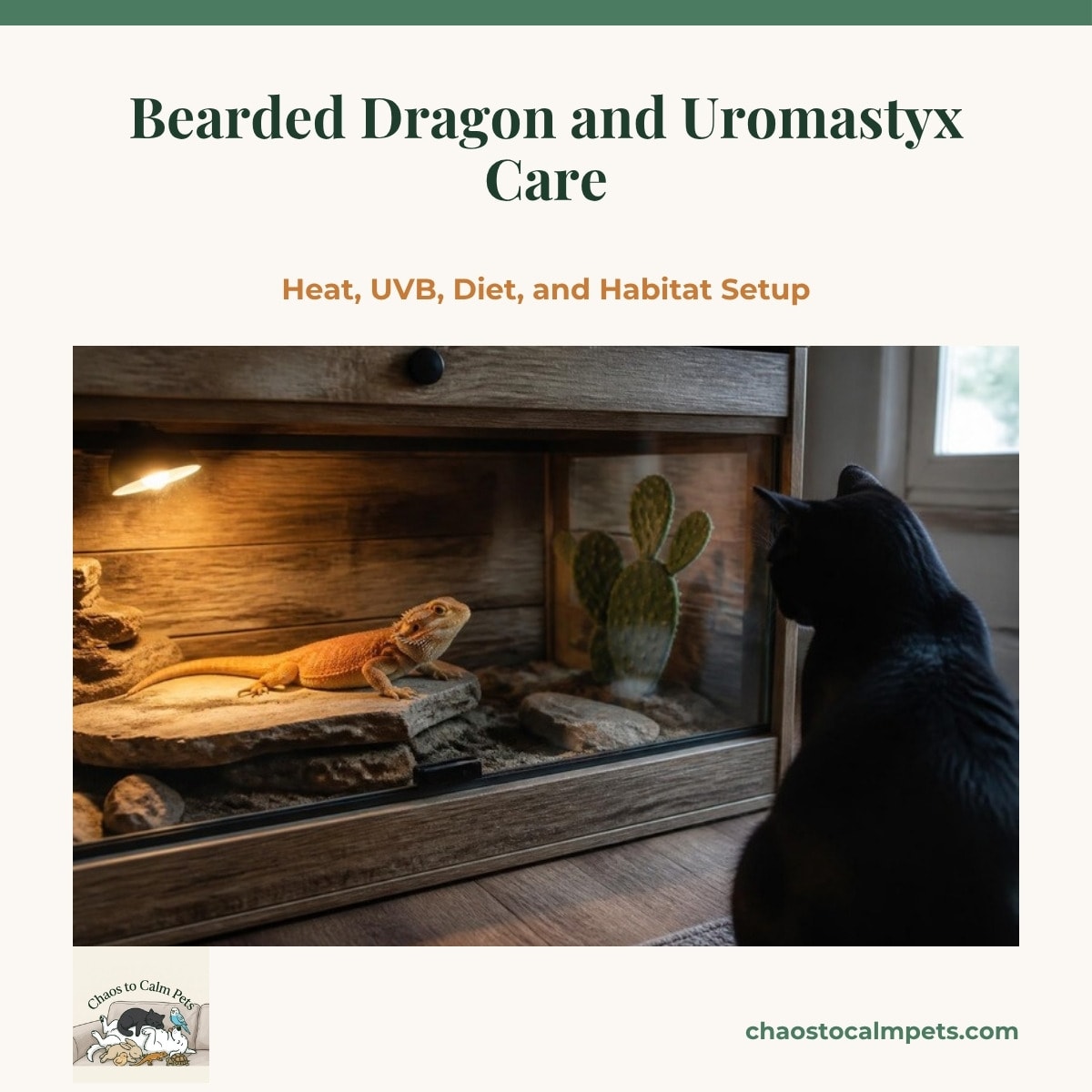
Desert lizards don't want a fish tank with a lamp on it. 20 modules on the arid biome done properly: a 4x2 front-opening wooden enclosure, halogen basking over slate, real thermal gradients, safe night drops, high-output T5 UVB measured with a Solarmeter, a hard-packed desert floor instead of calcium sand, deep digging zones, 20 to 40 percent humidity, safe plants, the omnivore menu by life stage, hydration cues, health audits, and finding a herp vet before you need one.
About this course
A bearded dragon or a uromastyx is a solar-powered animal that evolved under a brutal sky, and the tiny glass tank with a coil bulb that the pet store sold you is the opposite of that. This course rebuilds the habitat from the ground up. You'll learn why horizontal floor space matters more than height, why glass traps humidity and causes glass-surfing, how to engineer a basking spot with a halogen flood over a slab of slate, how to lay out a thermal gradient and let the animal choose, when a nighttime drop is healthy and when a ceramic heater is needed, why a T5 linear UVB tube with a reflector beats every coil bulb, what a Solarmeter reading should look like at the basking surface, which substrates kill (calcium sand, walnut shell, reptile carpet) and how to mix a hard-packed arid soil instead, how deep a digging zone should be, how to keep humidity at 20 to 40 percent while still offering a moist hide for shedding, which plants are safe and edible, how the omnivore menu shifts from insects to greens with age, how to read dehydration, how to handle without grabbing the tail, what a daily four-point health scan catches early, and how to find an ARAV-listed reptile vet before there's an emergency.
What you'll learn
- Why a 4x2 front-opening wooden or PVC enclosure beats any glass tank
- Halogen basking over slate, thermal gradients, and safe nighttime drops
- High-output T5 UVB, Ferguson zones, and measuring UV index with a Solarmeter
- Arid bioactive substrate, digging zones, and humidity between 20 and 40 percent
- The omnivore menu by life stage, gut-loading, dusting, and hydration cues
- Daily health scans, handling thresholds, and finding a herp vet early
Who this is for
Bearded dragon and uromastyx keepers who suspect the store setup is wrong, and anyone planning a desert species who wants to build it right the first time.
Course outline (20 modules)
Quiz & Certificate
Knowledge quiz
After completing all lessons, take a short quiz to test your understanding.
Go to quiz →Completion certificate
Pass the quiz and earn a shareable certificate of completion.
View certificate →Frequently asked questions
Ready to get started?
$9.99 · Lifetime access · 20 lessons