
New to Your Home · Birds
Backyard Chicken Care
Coops, Predators, and Hen Dynamics
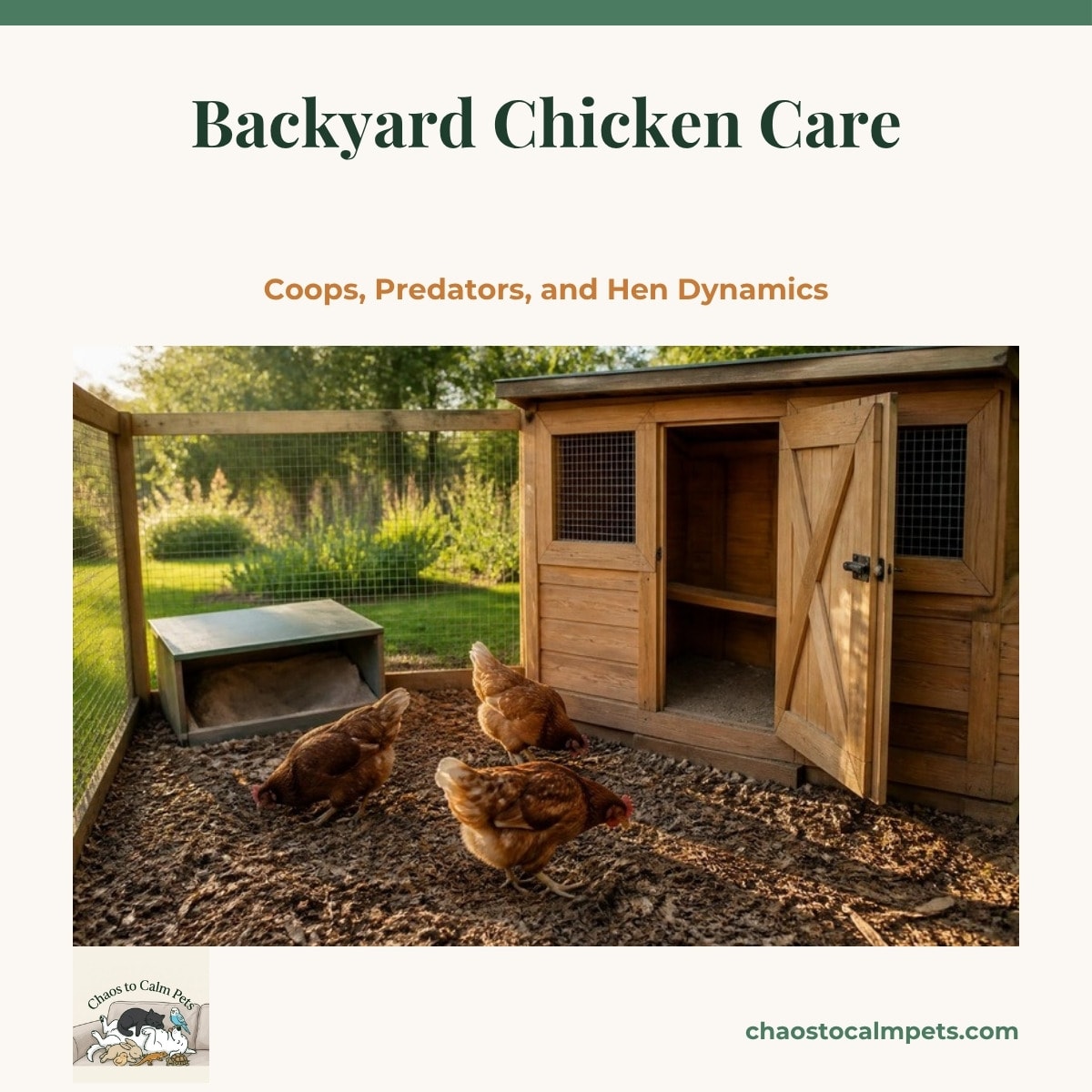
Chickens are easy until the first raccoon, the first broody hen, or the first winter. 10 lessons on choosing between hybrid layers, meat birds and heritage breeds, coop ventilation and flat roost bars, replacing chicken wire with hardware cloth and burying an apron, run space and the dust bath, integrating new hens without a bloodbath, layer feed, scratch limits, oyster shell and grit, breaking a broody hen, feeding the molt, foot infections, scaly leg mites and yolk problems, and wintering with deep litter and dry air.
About this course
A backyard flock asks a lot of questions in its first year, and this course answers them in the order they come up. You'll start by choosing birds: hybrid layers that give 250 to 300 eggs but burn out early, fast-growing meat breeds that need their feed managed, or hardy heritage breeds that lay well and handle winter. Then you'll build the coop right, with ventilation above the roost instead of a sealed box full of ammonia, wide flat roost bars that keep toes under warm feathers, and enough inches per hen that nobody fights at bedtime. Lesson 3 is the predator lesson: chicken wire keeps chickens in and nothing out, so you'll switch to hardware cloth and bury an apron. Lesson 4 sizes the run and builds the dust bath, and Lesson 5 walks you through adding new hens with a two-week see-but-no-touch pen and a nighttime introduction. The second half is feeding and health: layer feed as 90 percent of the diet with scratch kept under 10 percent, oyster shell and grit in their own hoppers, the cooling crate that breaks a broody hen in days, upgrading protein through the molt, spotting bumblefoot, scaly leg mites and the penguin stance of a yolk problem, and keeping combs frostbite-free in a dry, deep-littered winter coop.
What you'll learn
- Choosing between hybrid layers, meat breeds and heritage breeds for a backyard flock
- Coop ventilation above the roost, flat roost bars, and hardware cloth with a buried apron
- Ten square feet of run per bird, deep litter, and a covered dust bath against mites
- The pecking order, and integrating new hens with a two-week pen and nighttime introduction
- Layer feed, scratch limits, oyster shell and grit, and breaking a broody hen humanely
- Feeding the molt with more protein, spotting bumblefoot, mites and yolk trouble, and wintering dry
Who this is for
First-year chicken keepers who have the birds ordered and the coop half built; suburban families who lost a hen to a raccoon and want it never to happen again; and anyone with a hen who will not leave the nest box or a flock that stopped laying in October.
Course outline (10 modules)
Quiz & Certificate
Knowledge quiz
After completing all lessons, take a short quiz to test your understanding.
Go to quiz →Completion certificate
Pass the quiz and earn a shareable certificate of completion.
View certificate →Frequently asked questions
Ready to get started?
$9.99 · Lifetime access · 10 lessons