
New to Your Home · Birds
Baby Bird Weight Tracking
Gram Gains, Growth Curves, and Catching Stalls
The scale sees a sick chick a day or two before you do. 10 lessons on why a kitchen scale is not enough and what a 0.1 gram scale with a tare button gives you, weighing first thing in the morning on an empty crop, plotting the S-shaped growth curve, species benchmarks from budgies to macaws, turning the morning weight into the day's meal volume, the 48-hour plateau that means failure to thrive, keeping several chicks' records straight, the normal weight dip before fledging, building a digital studbook, and handing a complete record to the new owner.
About this course
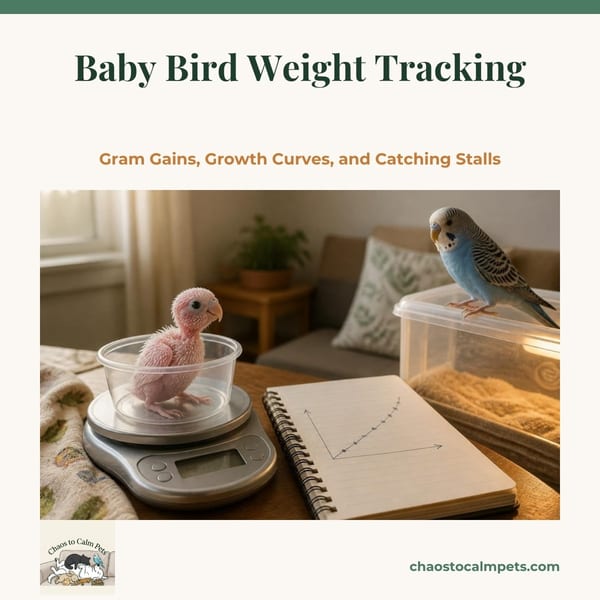
A chick cannot tell you it feels off, but its morning weight can. This course turns a scale and a notebook into the most reliable early-warning system in your nursery. It starts with the tool, a 0.1 gram digital scale with a tare button and a weighing cup, and why a kitchen scale that rounds to whole grams hides a shift that is 10 or 20 percent of a hatchling's body. Then the rule that makes the numbers mean something: weigh first thing in the morning on an empty crop, same time every day, before the first feed. You'll plot those numbers into the S-shaped curve a healthy chick follows, compare them to species benchmarks that run from a 2 gram budgie to a macaw gaining 25 grams a day, and use the morning weight to set that day's meal volume. Lesson 6 is the reason the course exists: a weight that flattens for 48 hours is failure to thrive and a vet call, not a wait-and-see. The later lessons keep a clutch of look-alike chicks from getting mixed up in the ledger, explain the normal 5 to 15 percent dip before fledging so you do not panic, and move your records into a digital studbook you can hand over, complete, when a weaned bird goes to its new home.
What you'll learn
- Why a 0.1 gram scale with tare replaces the kitchen scale, and weekly calibration
- The morning empty-crop weigh-in that makes every number comparable
- Plotting the S-shaped growth curve, and species benchmarks from budgies to macaws
- Turning the morning weight into the day's 10 percent meal volume and total intake
- Spotting failure to thrive at a 48-hour plateau, and keeping clutch records straight
- The normal pre-fledging weight dip, digital studbooks, and the handoff dossier
Who this is for
First-time hand-feeders who have been guessing whether the chick is growing; breeders raising a clutch of identical cockatiels or conures who need the ledger to stay honest; and anyone who wants a complete record to send with a bird to its new home.
Course outline (10 modules)
Quiz & Certificate
Knowledge quiz
After completing all lessons, take a short quiz to test your understanding.
Go to quiz →Completion certificate
Pass the quiz and earn a shareable certificate of completion.
View certificate →Frequently asked questions
Ready to get started?
$9.99 · Lifetime access · 10 lessons