
New to Your Home · Birds
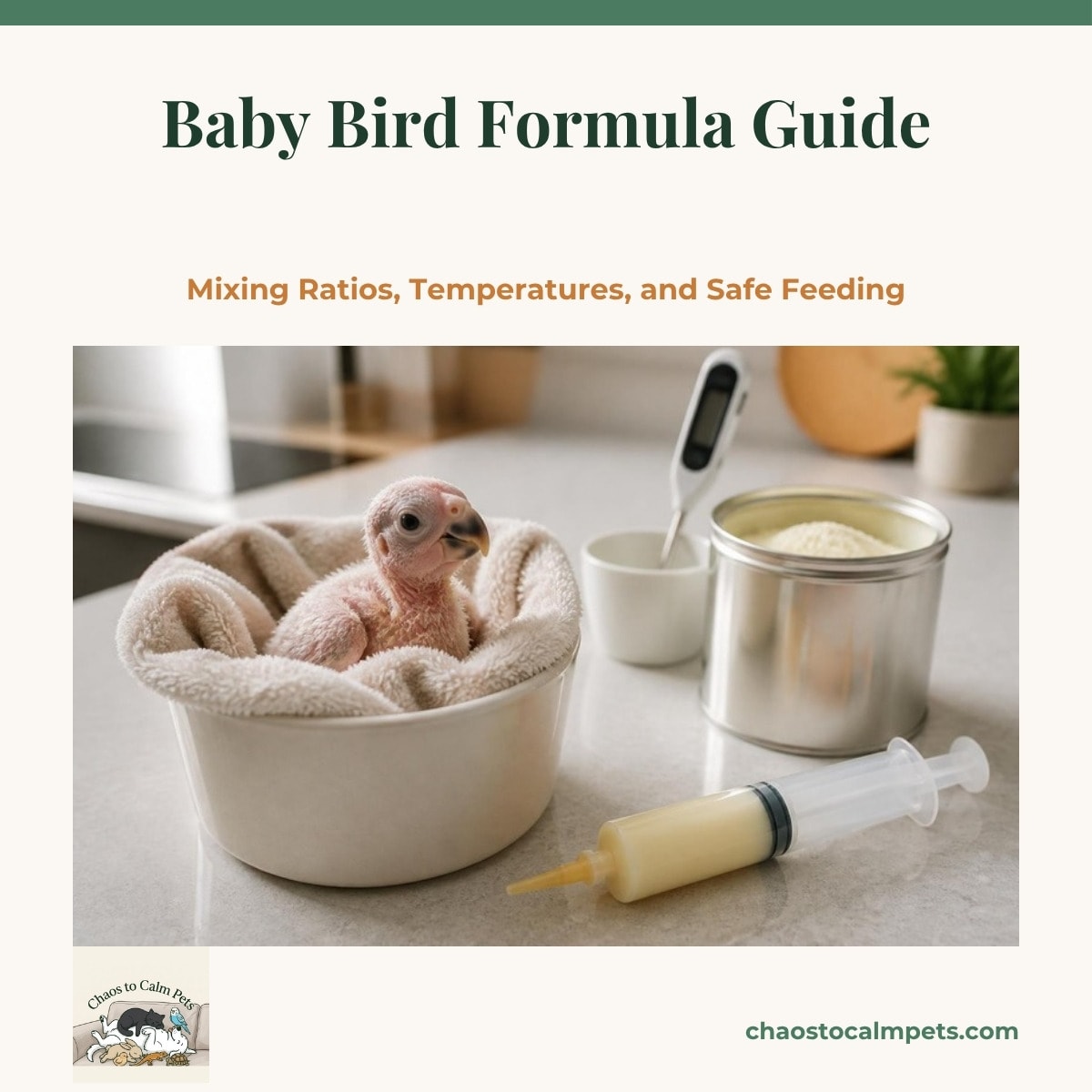
Baby Bird Formula Guide
Mixing Ratios, Temperatures, and Safe Feeding
A baby bird can't tell you the formula is wrong until it is already in trouble. 10 lessons on choosing a commercial formula by species and reading the protein and fat on the label, why kitchen mixes harden in the crop, thinning the mix for a day-one chick and thickening it week by week, the 104 to 106 degree serving window and the thermometer that checks it, microwave hot spots and crop burns, cold formula and crop stasis, which water is safe to mix with, the one-hour discard rule, reading crop-emptying time against mix thickness, and getting every lump out.
About this course
Most hand-feeding disasters start in the mixing cup, not in the chick. This course walks you through the formula itself, from the tin to the crop. You'll start by matching the formula to the species, reading protein and fat on the label and learning why you never switch brands overnight. Then you'll see what happens when someone tries a kitchen mix of cereal and egg instead, and why starch that settles in a crop sets like concrete. From there it is the practical stuff: how thin the mix needs to be for a day-old chick and how it thickens toward pudding over the weeks, the narrow 104 to 106 degree window that triggers the swallowing reflex, and the digital thermometer that replaces your wrist. Two lessons cover the two ways temperature kills: microwave hot spots that burn a hole through the crop, and cold formula that stops the crop moving and ferments into sour crop. You'll pick a safe water source, learn why mixed formula is thrown out after one hour, read how fast the crop empties as a check on your thickness, and finish with the simple mixing order that leaves no lumps to clog a syringe or plug a crop.
What you'll learn
- Choosing a commercial formula by species and label, and why kitchen mixes impact the crop
- How thin a day-one mix should be, and how it thickens week by week
- The 104 to 106 degree serving window, the swallowing reflex, and checking with a thermometer
- Why microwaves cause crop burns, and why cold formula causes crop stasis and sour crop
- Safe water for mixing, and the one-hour rule for throwing out mixed formula
- Reading crop-emptying time against mix thickness, and mixing a smooth, lump-free batch
Who this is for
First-time hand-feeders who just brought home a chick that still needs formula; breeders who lost a baby to crop stasis and want to know what went wrong in the cup; and anyone who has been testing formula on their wrist and wondering if that is good enough.
Course outline (10 modules)
Quiz & Certificate
Knowledge quiz
After completing all lessons, take a short quiz to test your understanding.
Go to quiz →Completion certificate
Pass the quiz and earn a shareable certificate of completion.
View certificate →Frequently asked questions
Ready to get started?
$9.99 · Lifetime access · 10 lessons