
New to Your Home · Birds
Baby Bird Brooder Setup
Controlling Heat, Drafts, and Safe Housing
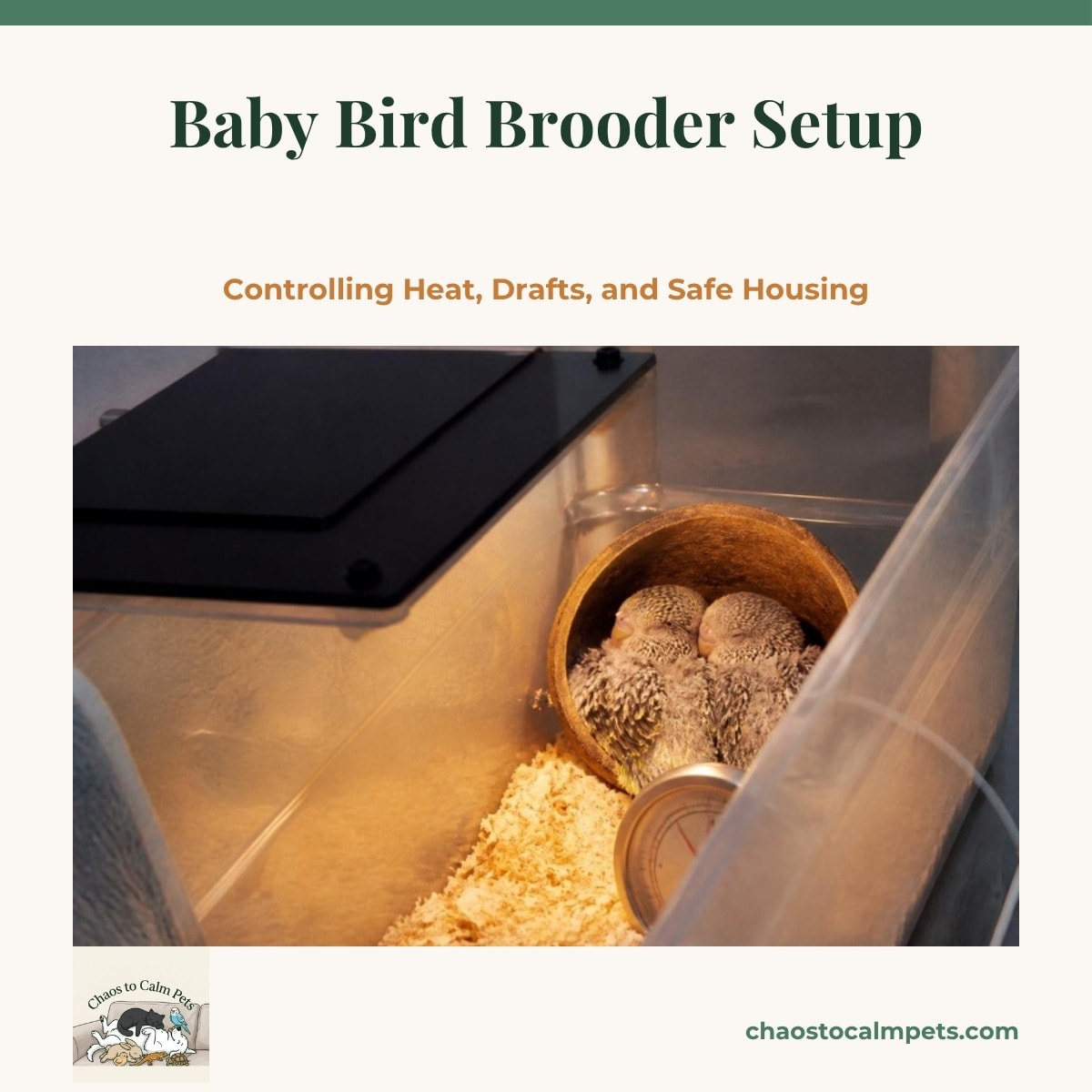
A naked chick can't make its own heat, so the box you put it in is doing that job for it. 10 lessons on commercial bird ICUs versus a well-built homemade brooder, radiant panels versus forced-air heat, the week-by-week temperature schedule from 95 to 97 degrees down to room temperature, a backup thermostat that stops a runaway heater, finding and sealing micro-drafts, a dark resting cup, dividers for mixed clutches, vents that bring in air without chilling anyone, the daily cleaning routine, and keeping babies warm through a power outage.
About this course
A parrot chick hatches naked, blind and with no fat to burn, and for the first weeks the brooder is its body heat. This course walks you through building one that does the job. You'll compare commercial bird intensive care units with a homemade brooder made from a smooth, non-porous tub, and learn why radiant heat panels suit newborns better than a fan blowing dry air across their skin. Then the schedule: 95 to 97 degrees in week one, stepping down each week toward room temperature as feathers come in, with the chicks themselves as your thermometer, huddling when cold and panting with wings out when hot. You'll wire a second thermostat a few degrees above the first so a stuck switch can't cook the clutch, and add an alarm. You'll pass a damp hand around every seam to find micro-drafts, give the chicks a dark resting cup away from the light, and divide the box when you have more than one clutch or more than one species. The last lessons cover vents that bring in fresh air without a draft, the daily cleaning routine with liner changes at every feeding, and the battery stations and warm packs that keep babies alive when the power goes out.
What you'll learn
- Commercial avian ICUs versus homemade brooders, and why every wall must be smooth and non-porous
- Radiant panels versus forced-air heat, and the week-by-week schedule from 95 to 97 degrees downward
- Reading huddling and panting as your real-time thermometer, and a backup thermostat with an alarm
- Finding micro-drafts with a damp hand, sealing lids with gaskets, and keeping intakes off the nest
- A dark resting cup for sleep and digestion, and acrylic dividers for mixed clutches and species
- Upper exhaust and baffled intake vents, the daily cleaning routine, and battery backups for outages
Who this is for
First-time hand-feeders building a brooder out of a plastic tub and a heat source, breeders upgrading from a cardboard box after a close call with a thermostat, and anyone raising budgie, cockatiel or conure chicks in a house where the power goes out in storms.
Course outline (10 modules)
Quiz & Certificate
Knowledge quiz
After completing all lessons, take a short quiz to test your understanding.
Go to quiz →Completion certificate
Pass the quiz and earn a shareable certificate of completion.
View certificate →Frequently asked questions
Ready to get started?
$9.99 · Lifetime access · 10 lessons