
New to Your Home · Birds
Baby Bird Brooder Humidity
Preventing Dehydration and Mold Infections
A warm brooder dries a naked chick out faster than you would believe. 10 lessons on why featherless babies lose water through their skin, putting the humidity sensor at chick level and salt-testing it, the mold that grows in warm wet corners, covered water pans and sponges instead of open bowls, ultrasonic misters for dry climates, stopping cold condensation drips from the lid, checking skin for plumpness every feeding, spotting tail bobbing and open-mouth breathing, stepping humidity down as feathers come in, and keeping slime out of every tank and tube.
About this course
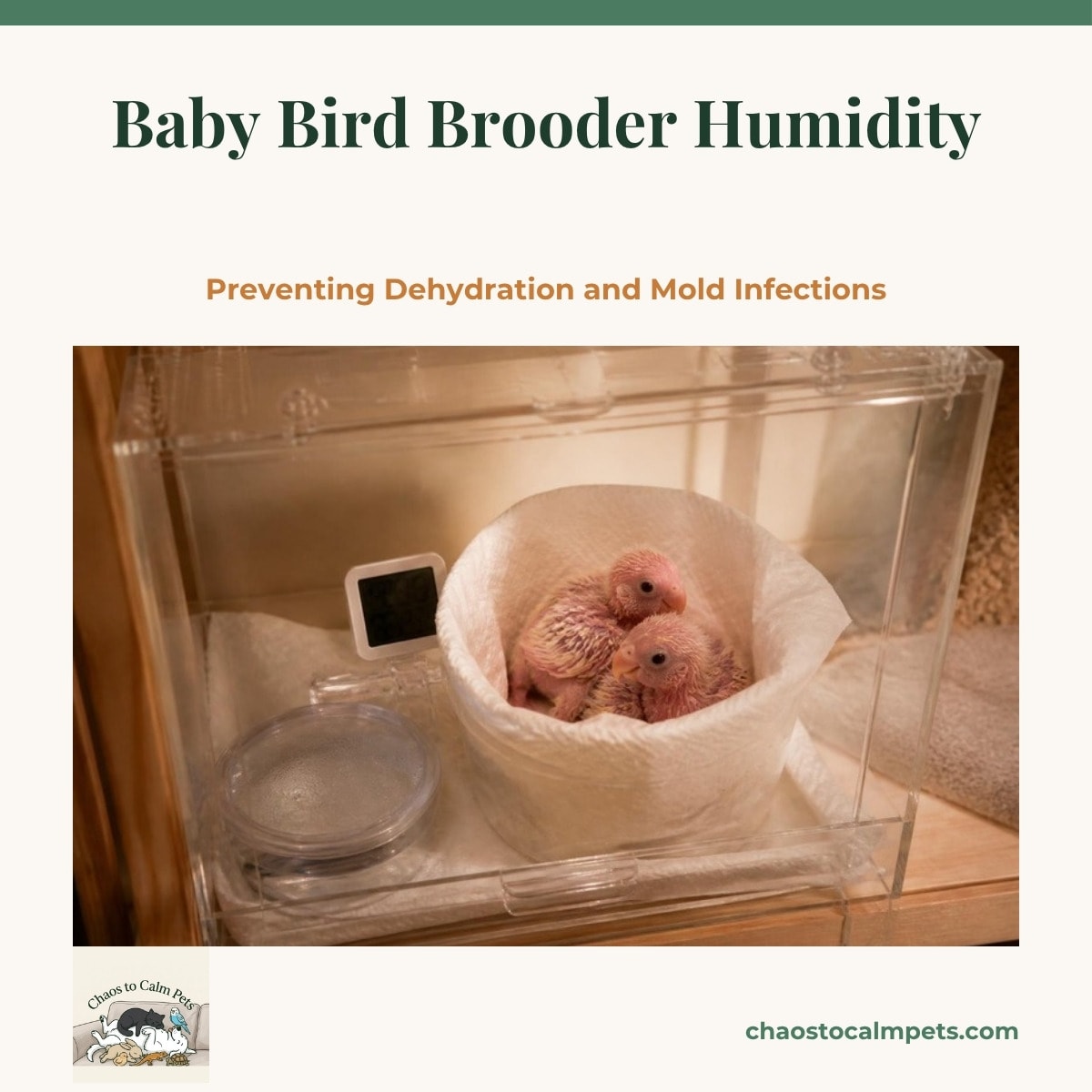
Heat keeps a naked chick alive, and the same heat pulls the water out of it, so humidity is the other half of a brooder. This course starts with why featherless babies have no waterproof skin and lose moisture fast at 95 to 97 degrees, and why 55 to 65 percent humidity is the cushion that protects them. You'll put a humidity sensor where the chick actually sleeps, not on the lid, and test it with the salt method so it isn't lying to you. Then the other side of the problem: warm wet air grows Aspergillus mold, and a chick breathing spores can develop an untreatable lung infection, so you'll learn covered water pans and sponge reservoirs instead of open bowls, with daily scrubbing. For dry rooms you'll see how an ultrasonic mister on a controller works and how to keep it from soaking the chicks, and you'll learn to slope the lid so condensation runs down the walls instead of dripping cold water on babies. The last lessons are the checks you do at every feeding, plump pink skin and quiet breathing, the warning signs of tail bobbing and gaping, the 7-day step-down from 60 toward 45 percent as feathers come in, and the cleaning schedule that keeps slime out of your tanks and tubing.
What you'll learn
- Why naked chicks lose water through their skin, and the 55 to 65 percent humidity target
- Mounting the sensor at chick level inside the nest cup, and salt-testing it against drift
- How Aspergillus takes hold in warm wet brooders, and covered pans and sponges over open bowls
- An ultrasonic mister on a controller for dry climates, and stopping condensation rain from the lid
- Reading skin for plumpness and color at every feeding, and spotting tail bobbing, gaping and clicking
- Stepping humidity down toward 45 percent over 7 days, and keeping slime out of the hardware
Who this is for
New hand-feeders who set the heat right and still found a chick with wrinkled skin, keepers in dry winter houses where a wet sponge never gets the brooder high enough, and anyone who lost a baby to a lung infection and wants to know where the mold came from.
Course outline (10 modules)
Quiz & Certificate
Knowledge quiz
After completing all lessons, take a short quiz to test your understanding.
Go to quiz →Completion certificate
Pass the quiz and earn a shareable certificate of completion.
View certificate →Frequently asked questions
Ready to get started?
$9.99 · Lifetime access · 10 lessons