
New to Your Home · Aquatic
Aquatic Frogs and Axolotls
African Dwarfs and the Cold-Water Salamander
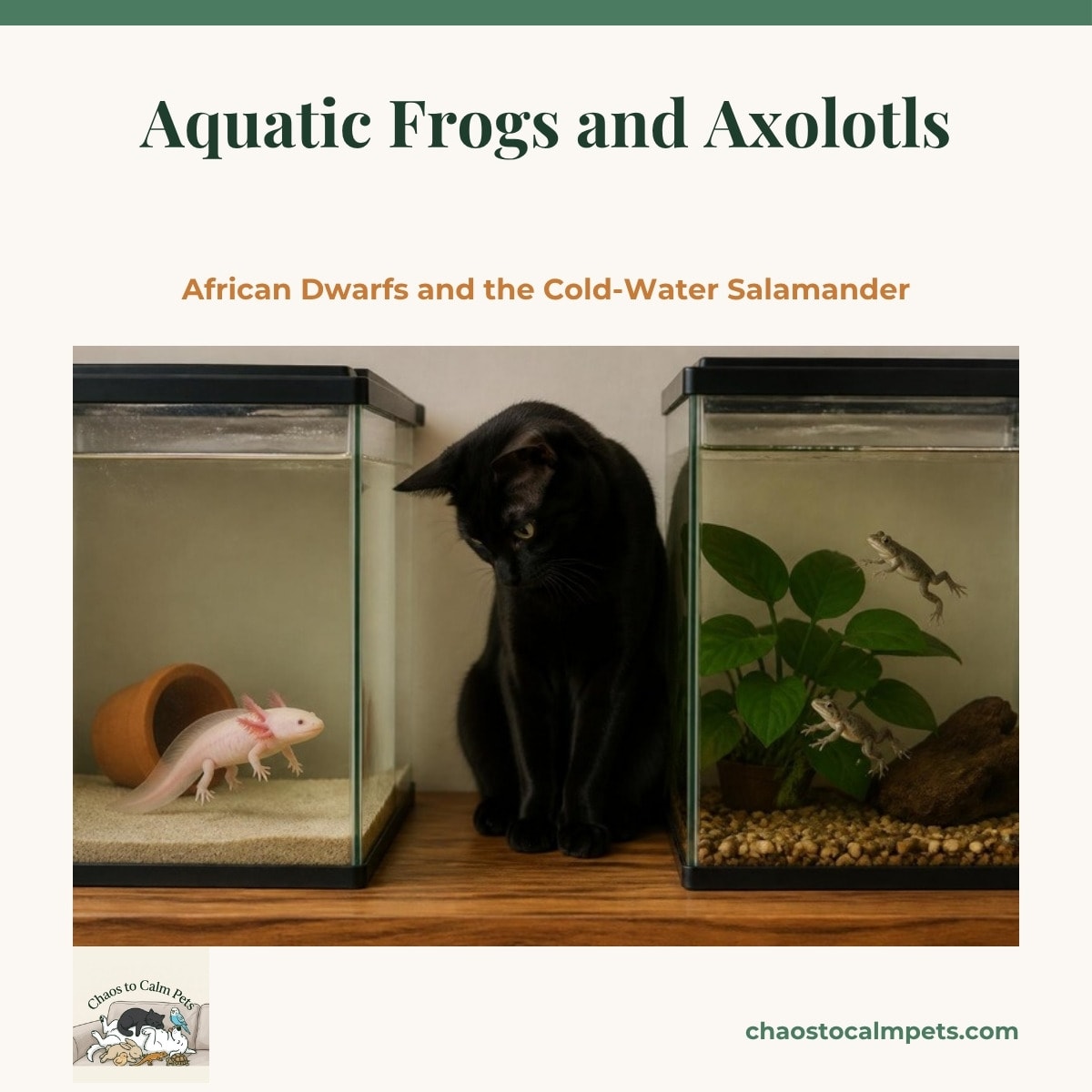
Two of the most unusual animals in the fish room need two very different setups. 10 lessons on telling African dwarf frogs from African clawed frogs, a shallow tank for lung-breathing dwarf frogs, target feeding so they don't go hungry among fast fish, the axolotl and its lifelong gills, keeping axolotl water at 60 to 64 degrees, safe floors that prevent impaction, gentle filtration that protects the gills, earthworms and the foods to avoid, why axolotls don't live with fish, and reading gill health.
About this course
This course covers two very different animals that often come up in the same conversation at the fish store. The first three lessons are about African dwarf frogs. You'll learn to tell them from African clawed frogs, which grow to 5 inches, eat tank-mates and are banned in several states. Then you'll set up a shallow tank for a frog that breathes air with lungs, and learn to target feed so your frogs don't lose every meal to faster fish. Lesson 4 introduces the axolotl, a salamander that keeps its gills for life, along with the places where owning one is illegal or needs a permit. From there you'll keep the water cold at 60 to 64 degrees, choose a bare or fine sand floor so your axolotl doesn't swallow gravel, set up gentle filtration that won't curl its gills, and feed earthworms instead of mealworms or feeder goldfish. The last two lessons explain why axolotls and fish don't share a tank, and how to read the gills as a daily health check, including what to do first and when to call a vet.
What you'll learn
- How to tell a peaceful African dwarf frog from a predatory African clawed frog
- A shallow, plant-filled tank for dwarf frogs that breathe air with lungs
- Target feeding dwarf frogs with tongs or a baster so faster fish don't win
- Axolotl biology, local laws, and keeping the water between 60 and 64 degrees
- Gravel-free floors, gentle filtration, and an earthworm-based diet for axolotls
- Why axolotls live without fish, and reading their gills as a health check
Who this is for
First-time keepers who bought a dwarf frog for a community tank, parents whose kid wants an axolotl and who need the cold-water and legal facts first, and keepers whose axolotl's gills have started to curl or shrink.
Course outline (10 modules)
Quiz & Certificate
Knowledge quiz
After completing all lessons, take a short quiz to test your understanding.
Go to quiz →Completion certificate
Pass the quiz and earn a shareable certificate of completion.
View certificate →Frequently asked questions
Ready to get started?
$9.99 · Lifetime access · 10 lessons