
New to Your Home · Aquatic
Aquarium Sizing
Flow, Volume, and the Bigger is Easier Rule
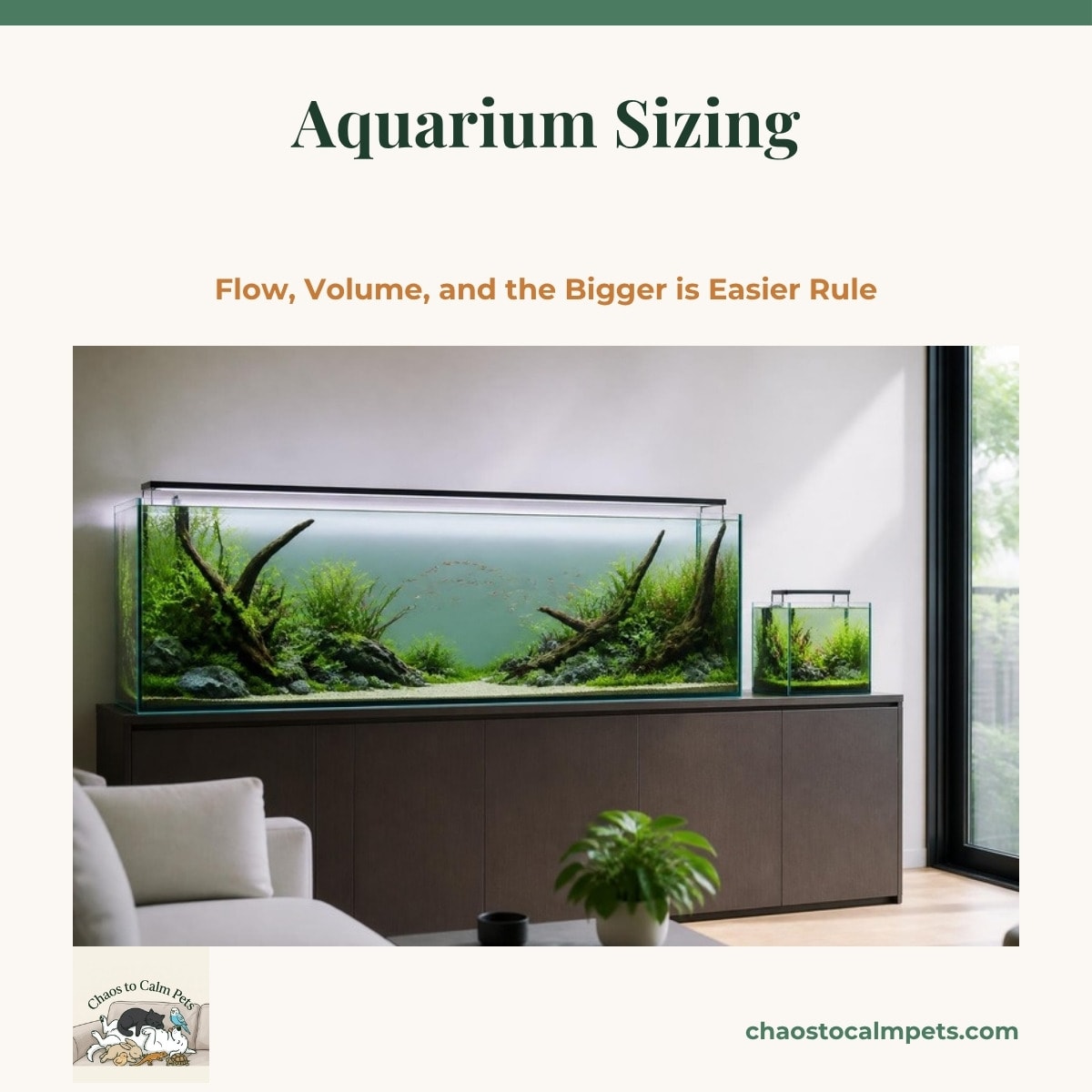
Small tanks look easier, but one missed water change can turn them toxic fast. 10 lessons on how water volume dilutes waste, surface area and oxygen, thermal mass and heater failures, why one inch per gallon fails, long versus tall tanks, placing a heavy tank safely, glass versus acrylic, living with a rimless tank, working out your true water volume for dosing, and moving fish into a bigger tank without a new-tank crash.
About this course
If you have been told a small tank is the easy way to start, this course explains why the opposite is true. Lesson 1 shows how a larger volume dilutes fish waste, so one missed water change or heavy feeding does not turn the water harmful within a day or two. Lesson 2 covers the water's surface, where oxygen comes in and carbon dioxide leaves, and why tall, narrow containers struggle. Lesson 3 explains thermal mass and why a stuck heater is so much more dangerous in a 5-gallon tank. Lesson 4 retires the one-inch-per-gallon rule and replaces it with what sets stocking limits: how much waste your filter's bacteria can handle, adult size, swimming room, oxygen and how the fish get along. Then you'll choose between long and tall tanks, plan where a tank weighing hundreds of pounds can safely sit, weigh glass against acrylic, and decide whether a rimless tank's evaporation and jumping risks suit you. Lesson 9 shows you how to work out your true water volume so medications are dosed correctly, and Lesson 10 walks you through moving fish into a bigger tank without a new-tank ammonia spike.
What you'll learn
- Why bigger tanks dilute waste and protect fish from one missed water change
- Surface area, oxygen exchange, and how thermal mass buffers heater failures
- Why one inch per gallon fails, and what sets real stocking limits
- Long versus tall tanks, and placing a heavy tank on a safe, level floor
- Glass versus acrylic, and the evaporation and jumping risks of rimless tanks
- Working out true water volume for dosing, and upgrading to a bigger tank safely
Who this is for
First-time buyers choosing between a small kit and a larger tank; keepers who keep losing fish in a small bowl or nano tank; and anyone planning an upgrade who wants to place, fill and stock the new tank safely.
Course outline (10 modules)
Quiz & Certificate
Knowledge quiz
After completing all lessons, take a short quiz to test your understanding.
Go to quiz →Completion certificate
Pass the quiz and earn a shareable certificate of completion.
View certificate →Frequently asked questions
Ready to get started?
$9.99 · Lifetime access · 10 lessons