
Emergency Prep · Aquatic
Aquarium Power Outages
Battery Pumps, Fasting, and Hurricane Survival
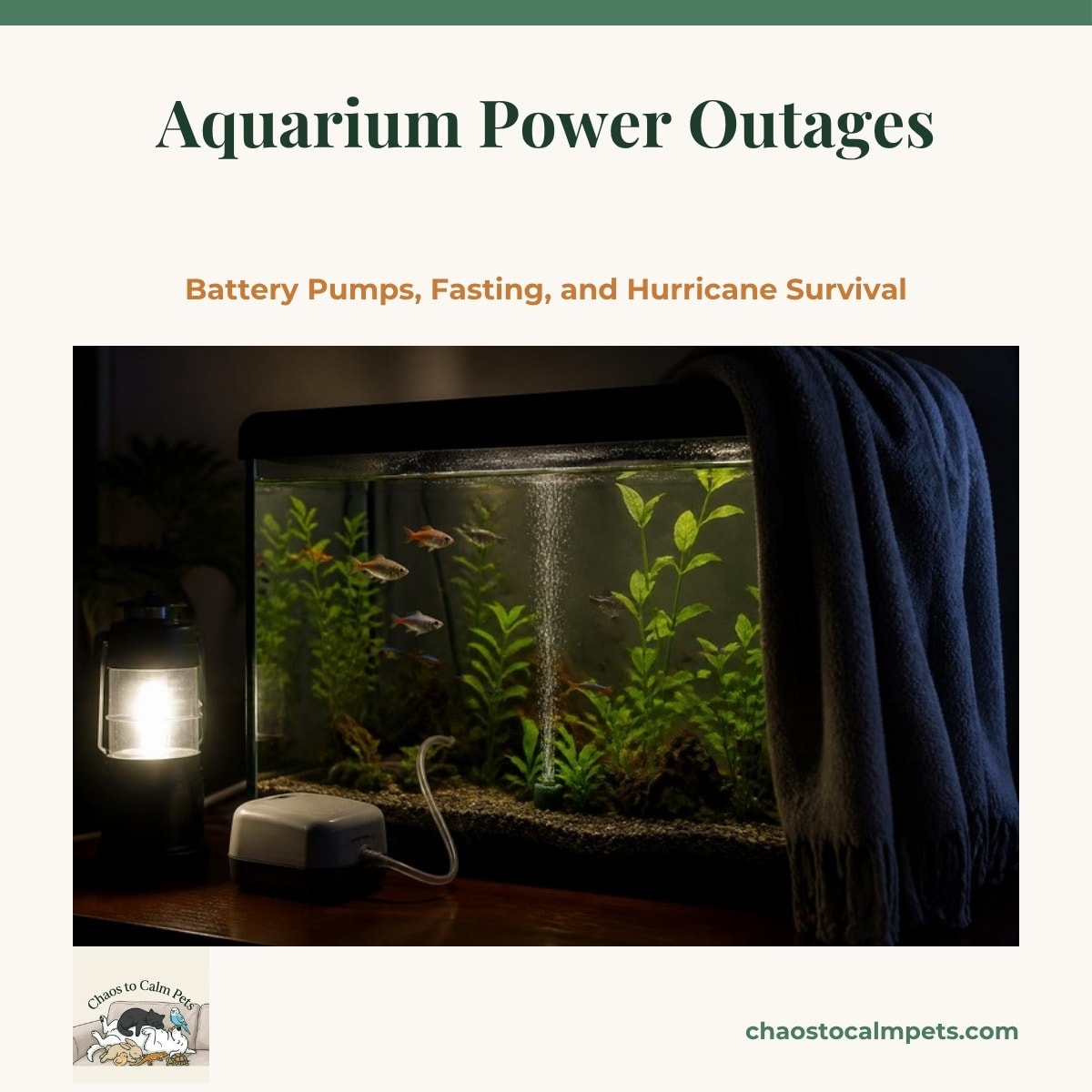
When the power goes out, the first threat to your fish is not cold water but a lack of oxygen. 10 lessons on why a still surface suffocates a tank, battery air pumps and check valves, fasting your fish, keeping filter bacteria alive, insulating the tank in winter, warm water bottles and heat packs, the pitcher pour, testing for ammonia and using a binder, restarting filters safely when the power returns, and the recovery steps after a hurricane.
About this course
When the power goes out, it is easy to worry about the heater first. This course starts with the bigger threat: once filters stop, the surface goes still and oxygen drops, sometimes within hours. Lesson 2 shows you how to set up a battery air pump with an airstone and a check valve, and what to keep on hand. Lesson 3 explains why you stop feeding adult fish, and how to handle fry, young or thin fish if the outage runs long. Lesson 4 covers keeping the bacteria in your filter alive when the water inside stops moving. For winter storms, Lessons 5 and 6 walk you through wrapping the tank to hold heat, checking the temperature without unwrapping it, and adding warmth safely with water bottles and heat packs on the outside of the glass. Lesson 7 is the pitcher pour, your last resort when batteries run out. Lesson 8 covers testing for ammonia and using a binder as a stopgap. Then you'll learn why you never let a filter restart on its own, how to plug back in safely with GFCI outlets, and the recovery steps once the storm has passed.
What you'll learn
- Why a still surface is the first danger, and setting up a battery air pump
- Why you stop feeding adult fish, and how to keep filter bacteria alive
- Insulating the tank in winter and checking the temperature without unwrapping it
- Safe warming with water bottles and heat packs, and the pitcher pour
- Testing for ammonia during an outage and using a binder like Seachem Prime
- Restarting filters safely when power returns, and the full post-storm recovery routine
Who this is for
Keepers in hurricane and winter storm areas who want a plan before the next outage; anyone with a canister filter who is not sure what happens to it without power; and families whose fish tank belongs on their emergency checklist.
Course outline (10 modules)
Quiz & Certificate
Knowledge quiz
After completing all lessons, take a short quiz to test your understanding.
Go to quiz →Completion certificate
Pass the quiz and earn a shareable certificate of completion.
View certificate →Frequently asked questions
Ready to get started?
$9.99 · Lifetime access · 10 lessons