
Health & Care · Cold-Blooded Crew
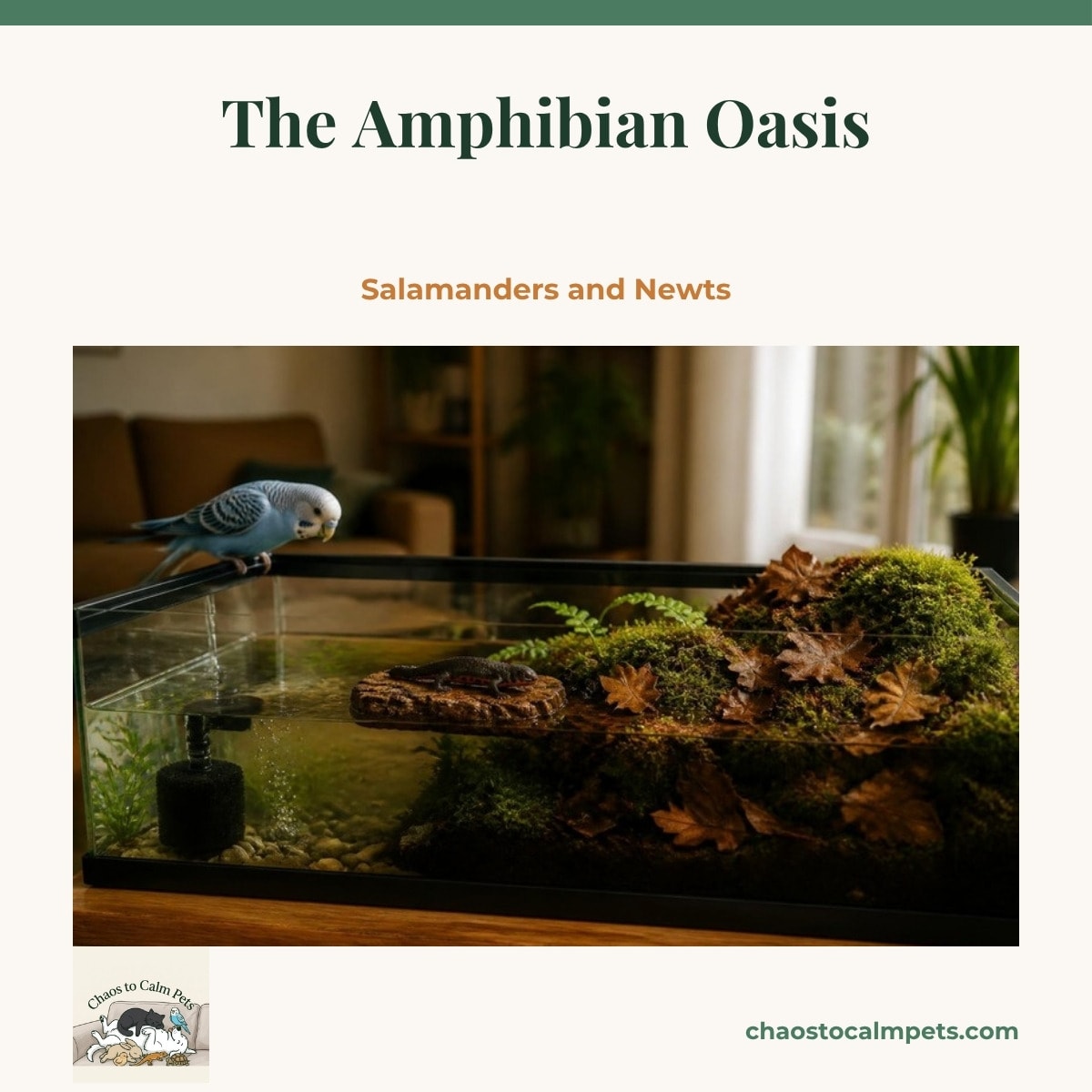
The Amphibian Oasis
Salamanders and Newts
An animal that breathes through its skin lives or dies by its water. 20 modules on the double life of salamanders and newts, pH and hardness, cycling a tank for four to six weeks before anyone moves in, chlorine and chloramine burns, sponge filters and baffled currents, keeping water cold with chillers and fans, fully aquatic tanks versus paludariums versus damp-soil enclosures, cork-bark ramps and tethered rafts, the wrung-out-sponge rule, why small gravel kills, Anubias and Java fern, the earthworm staple, lean feeding, the hands-off slime-coat rule and wet nitrile gloves, efts and the return to water, enrichment, the four-point scan, 100% emergency water changes, and finding an amphibian vet.
About this course
A salamander's skin is its lungs, its kidneys, and its biggest vulnerability, which makes the water in its tank a life-support system rather than decoration. This course teaches you to run that system. You'll learn why pH should sit steady between 7.2 and 7.8 and what general and carbonate hardness do, how the nitrogen cycle turns ammonia into nitrite and nitrate and why a new tank runs empty for four to six weeks first, why untreated tap water is a chemical burn and what a conditioner like Seachem Prime does, why a rushing power filter exhausts a clumsy swimmer and how a sponge filter or a baffle fixes it, why water above 74°F crashes an immune system and how chillers and evaporation fans hold the 60 to 68°F range, how a fully aquatic tank differs from a paludarium or a damp forest-floor enclosure, how cork-bark ramps and tethered rafts prevent drowning, why land soil should feel like a wrung-out sponge and why reptile carpet is banned, why small gravel is swallowed and fatal and large river stones aren't, which plants survive low light, why earthworms are the staple and how often an adult actually eats, how to spot a chubby newt, why bare hands strip the slime coat and wet nitrile gloves don't, what an eft is and how it finds its way back to water, how to rearrange a tank so it stays interesting, how to do the daily four-point scan and set up a hospital bin, what to do the minute ammonia spikes, and how to find a vet through the ARAV directory before you need one.
What you'll learn
- Skin breathing, the water-quality imperative, pH, hardness, and weekly liquid test kits
- The nitrogen cycle, fishless cycling, tap-water conditioners, and gentle sponge filtration
- Cold-water temperature control, aquatic versus paludarium versus terrestrial layouts, and safe shorelines
- Damp organic soils, river stones instead of gravel, hardy plants, and the earthworm staple
- Lean feeding, slime-coat protection, gloved handling, efts, and the return to water
- Enrichment, the daily four-point scan, hospital bins, ammonia triage, and finding an amphibian vet
Who this is for
New and intermediate keepers of fire-bellied newts, axolotl-adjacent salamanders, tiger salamanders, and other caudates, aquarists crossing over from fish, and anyone whose amphibian keeps getting fuzzy spots.
Course outline (20 modules)
Quiz & Certificate
Knowledge quiz
After completing all lessons, take a short quiz to test your understanding.
Go to quiz →Completion certificate
Pass the quiz and earn a shareable certificate of completion.
View certificate →Frequently asked questions
Ready to get started?
$9.99 · Lifetime access · 20 lessons